

About the Author
Extreme temperatures can expose weaknesses in cold chain transport for pharmaceutical distribution that remain hidden during normal conditions. CoolKit’s Cameron Javed explains why temperature-controlled vehicles need to be specified around the conditions they will actually experience throughout their working life.
Having experienced another unprecedented hot, dry summer, those responsible for temperature-controlled fleets are seeing how quickly weaknesses in vehicle specification can be exposed. For pharmaceutical operators, maintaining the required temperature throughout the distribution journey is critical, with a temperature excursion potentially resulting in investigation, load quarantine, product loss and disruption to patient supply.
I’m seeing an increasing pattern. When vehicles are operating within normal seasonal conditions, a specification can appear to perform perfectly well. It is when we experience periods of extreme heat or cold that the vehicles are really tested. That is often when operators start asking what can be done to improve temperature stability and prevent future deviations.
Ironically, some of the decisions that have the greatest impact on a vehicle’s performance are made long before it ever sees an extreme day, during the initial specification meeting. The vehicles that continue to perform reliably when conditions become challenging are those that have been designed around the realities of their intended operation, with the vehicle converter and operator working together to understand the risks and build the right level of performance into the vehicle from the outset. At CoolKit, that consultative approach is central to how we work with pharmaceutical fleets. The right specification isn’t necessarily the cheapest one on day one; it’s about ensuring the vehicle can hold up throughout its working life, even when operating conditions become more demanding.
Refrigeration is only part of the equation
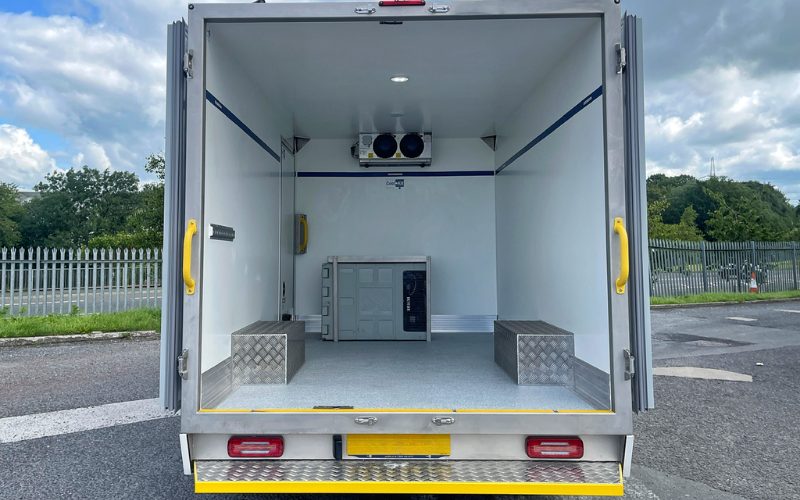
It is important to look beyond the refrigeration unit itself.
To understand why heat is such a stress test, it helps to appreciate what the refrigeration system has to do. Essentially, the refrigeration unit’s job is to remove heat that’s entered the loadspace. The greater the difference between the external ambient temperature and the required temperature inside the vehicle, the greater the cooling load the refrigeration system needs to manage.
However, refrigeration performance is influenced by much more than temperature differential alone. Ambient temperature, solar gain, insulation performance, door openings, loading conditions, vehicle utilisation and the temperature of the product being transported, can all have an impact on its performance.
For vehicles operating within a controlled ambient range, such as +8°C to +25°C, the refrigeration system has less work to do to bring down and maintain the correct ambient temperature. However, when external temperatures, like those we’re seeing this summer, move towards the extremes of the vehicle’s operating environment, the refrigeration system often needs to work a lot harder to bring the load space into range and keep it there.
This becomes particularly critical for refrigerated compartments operating at +2°C to +8°C, where the difference between the external ambient temperature and the required load space temperature can be much greater.
A refrigeration unit that performs adequately under average conditions may have considerably less operating margin when ambient temperatures rise significantly, particularly if frequent door openings, loading practices or inadequate thermal performance are also working against it.
For pharmaceutical operators, the consequences of losing that margin can be significant. A temperature excursion can result in investigation, quarantine of the affected load, potential product rejection and additional quality and GDP considerations.
Specify for the conditions the vehicle will actually experience
This is why I believe fleets should be specified for the extremes they are increasingly expected to encounter.
At CoolKit, we work closely with our customers to find out how they intend to use the vehicle and the conditions it’s likely to experience throughout its working life. That means taking a holistic approach to the entire vehicle, rather than treating each element separately.
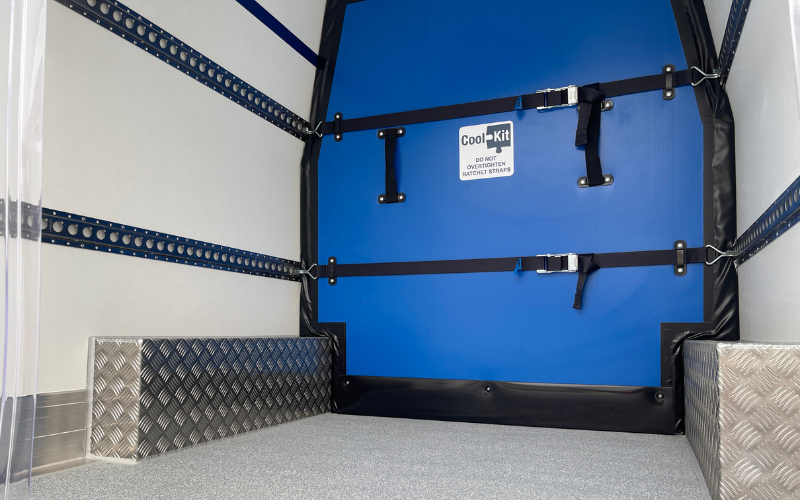
Insulation performance is an important part of that calculation, but it is not simply a case of adding more material. The type of insulation, its thermal conductivity, the resulting thermal resistance and the way the conversion is constructed all influence how effectively the vehicle can resist heat entering the load space.
The objective is not to design for an unrealistic worst-case scenario, but to understand the operating environment and provide sufficient performance margin for the conditions the fleet is likely to encounter.
The cost of cutting specification
In my experience, making compromises in specification to achieve a lower upfront cost can prove to be a false economy. A vehicle may perform perfectly well under normal operating conditions, but when ambient temperatures rise, or the vehicle is subjected to a more demanding delivery cycle, any lack of performance margin can quickly become apparent.
The cost of addressing that retrospectively can be considerably higher than getting the specification right from the outset. Retrofitting equipment, vehicle downtime and operational disruption can all outweigh the saving originally made.
That is why specification decisions should be considered across the whole vehicle lifecycle, rather than simply against the initial purchase price. The lowest cost specification at the point of order is not necessarily the lowest cost solution over the life of the fleet.
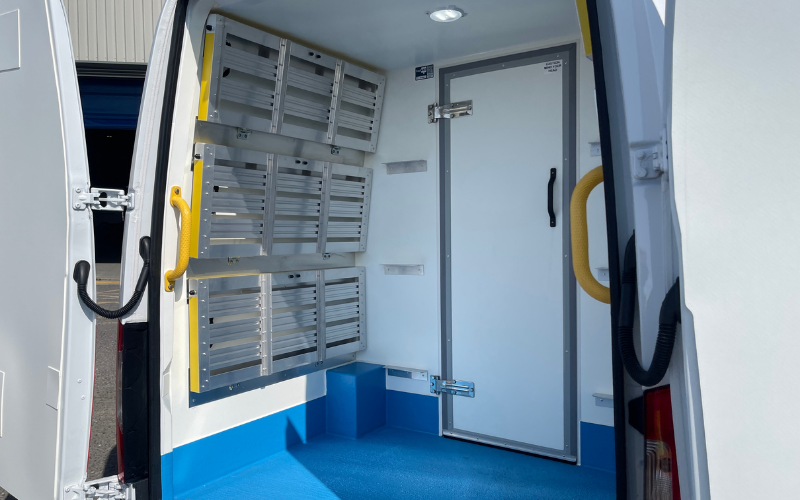
Performance doesn’t end when the vehicle leaves the factory
Specification is only one part of maintaining a reliable pharmaceutical cold chain.
Once a vehicle enters service, refrigeration equipment and temperature monitoring systems need to be properly maintained and calibrated. Operators also need confidence that the system is performing as intended and that the temperature data they rely on is accurate.
For pharmaceutical operators, these activities form part of the wider controls needed to maintain the required conditions and support GDP-compliant distribution.
Operational practices matter too. Loading, door openings, pre-conditioning, driver procedures and the way vehicles are used can all influence temperature performance. A well-designed vehicle can only perform as intended if it is supported by appropriate operating and maintenance procedures.
That is why technical support throughout the vehicle’s working life is just as important as the original specification. Our nationwide network of field-based engineers supports customers beyond the initial conversion, helping operators maintain refrigeration and temperature-control systems throughout the life of their vehicles.
My advice for fleet operators is always to try and look beyond the initial purchase price. Look at the refrigeration system, the thermal performance of the conversion, monitoring, calibration, maintenance and operational support and, most importantly, how the complete vehicle is expected to perform over its working life.
With a sixth heatwave potentially on the horizon, extreme weather is only going to become more frequent. Fleets that are set up to battle the extremes will be better positioned to keep their vehicles running when the next record falls, minimising disruption and delivering safely and compliantly.
